Featured
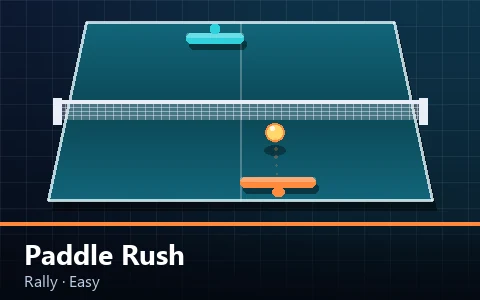
Paddle Rush
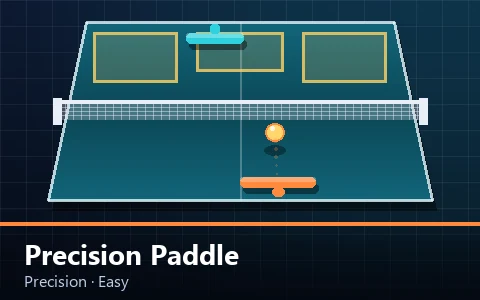
A quick, friendly rally game with a wide paddle and a patient opponent. The best place to learn how the table works.
Ordered by your own activity
This page orders games by what you have played and saved in this browser. It is not a global ranking, because a static site with no server cannot honestly measure one.
How this list is built: Ordered by how often you have played each game on this device and which ones you have saved as favourites, falling back to our editorial picks before you have played anything. No visitor counts, ratings or global statistics are used anywhere on this site.
A quick, friendly rally game with a wide paddle and a patient opponent. The best place to learn how the table works.
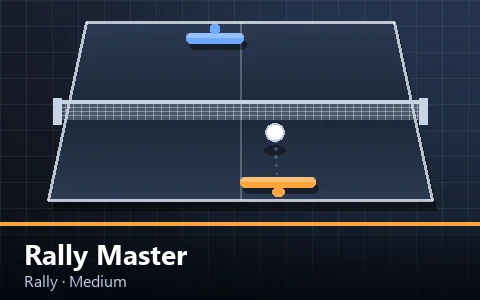
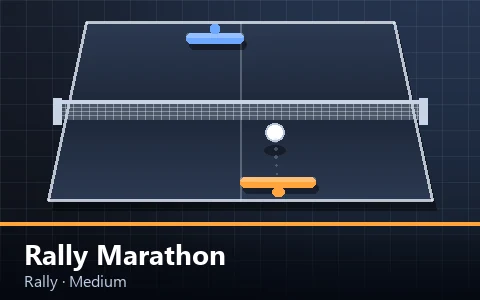
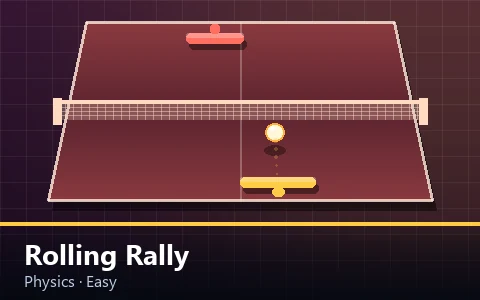
The purest rally game on the site. No match score, no bracket — just a counter that goes up until you miss.
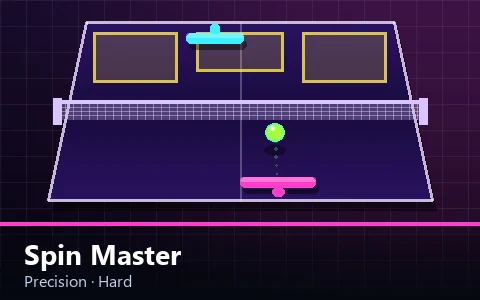
A placement game built entirely around spin. The aim marker shows where a flat ball would land — spin is what happens instead.
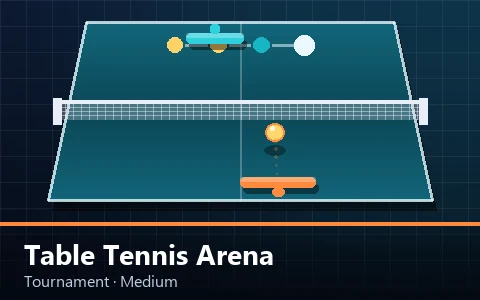
The full knockout. Quarterfinal to final against a roster drawn fresh each run, ending with the arena champion.
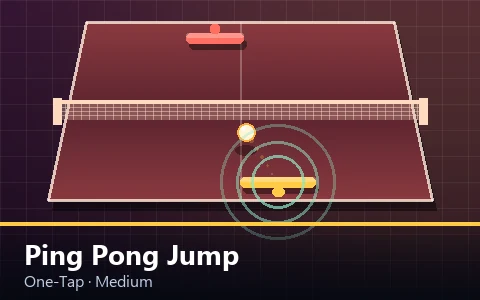
The most accessible game on the site. Position is handled for you — the entire game is the moment you press.
The fastest two-player variant, in an original pixel-flavoured arena. Sharp, quick and unforgiving.
The long one. Ten stages of mixed goals at rising difficulty, built for players who have already cleared the other challenge games.
Everything Ping Pong Arcade does, in one run: rallies, serving, targets, survival and points against the full difficulty range.
A ladder of eight arcade challenges that introduces rallying, placement, survival and pressure in that order.
The rally game with the pace turned up. A narrower table means the ball comes back before you have finished the last shot.
A serving range with no opponent and no rally. Aim, time the meter, and find out exactly where the ball landed.
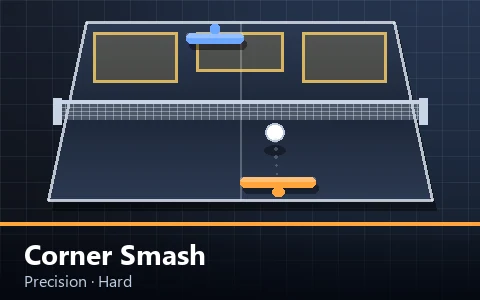
A placement game that rewards the two deep corners above everything else — and gives you a smash button to reach them with.
A pure reaction test. Every ball is fired away from where you are standing, and the game tells you how quickly you moved.
First to eleven, alone or with a friend on one keyboard. The smash is the strongest on the site and the net is the price.
A short knockout series. Three opponents, three described playing styles, and a bracket that saves itself between visits.
The long-distance rally game. The ball never gets truly fast, so the only thing that ends a run is concentration.
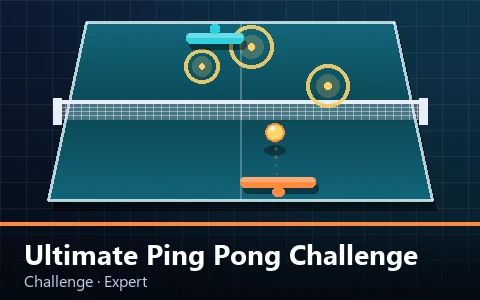
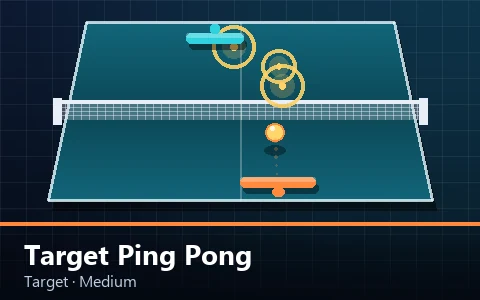
A live rally with moving scoring rings on the opponent's half. Placement under pressure, with the target refusing to stand still.
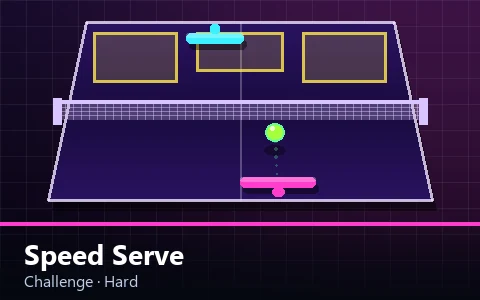
Serving practice with the clock running. A charge meter replaces the timing bar, and overcharging costs you accuracy.
Placement, taught properly. Large zones, one called at a time, and a patient opponent while you learn the contact point.
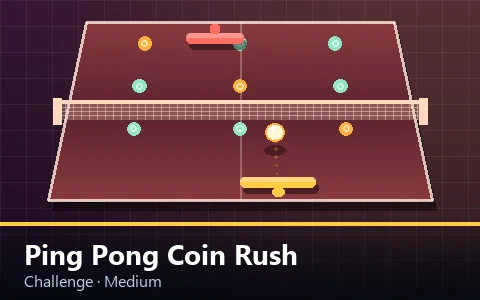
Tokens sit across the table and the ball sweeps them up as it flies. The route matters as much as where it lands.
No opponent — a rebound wall instead. Balls keep joining until you cannot cover them all.
A physics shooting range. Ten launches, waves of targets, blockers in the way, and all the time in the world to think.
A full match with the gravity halved. The ball floats, arcs flatten, and the net becomes a much bigger problem.
The slowest standard-gravity variant. High drag and a dead bounce make every exchange long and deliberate.
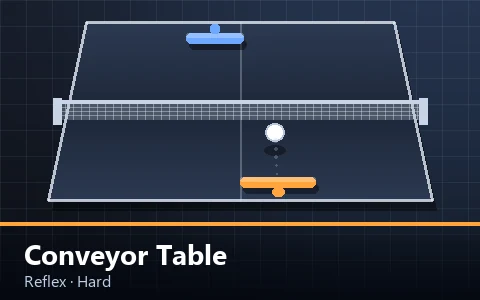
A rally game where the playing surface drifts. Four bands push in alternating directions and the pattern never settles.
The opponent blends continuously from Easy toward Expert while you play. One mistake ends the run.
The timing game with a narrower window and a faster ball. Same single input, considerably less room for error.
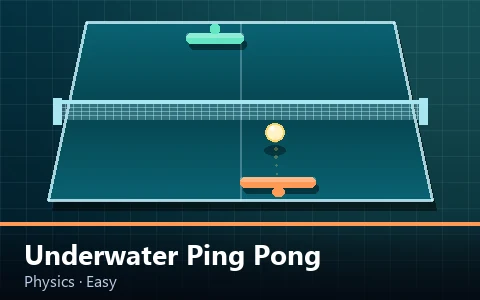
The slowest game on the site. Buoyancy and heavy drag turn every exchange into something you can genuinely think about.
A boss ladder where every opponent changes something about the table — and the last one changes three things at once.
The harder endless mode. Starts at Medium, ramps in under two minutes, and gives you a single life throughout.
Ping Pong Arcade is a static website. There is no server, no database and no account system, which means there is nowhere for a shared high-score table to live and no way to verify a submitted score even if there were.
Rather than invent one, the site is honest about the limitation. Every number you see anywhere here came out of your own browser, and the only record you are competing against is your own previous best.
The same reasoning rules out player counts, download figures, star ratings and user reviews. None of those could be collected on a site built this way, so any that appeared would be fabricated.
The fact-checking policy sets out the full list of numbers this site will not publish, and why.